
What is in Hobart's tap water, and which filter fixes what
We may earn a commission when you buy through links on this page.Paid links: we may earn a commission. Between equal products or shops, one that pays us can go first. How this works.
Brita Marella XL 3.5L jug
Chlorine is the only taste issue and a $50 jug handles it.
$49.90 at Bunnings, checked 23 Oct 2026 · Amazon's price is on its page
Paid links: we may earn a commission. As an Amazon Associate I earn from qualifying purchases. It doesn't change which product is here.
Our picks at a glance
| Product | TasteBrita Marella XL 3.5L jug $49.90 at Bunnings | ShowerPhilips 3-stage shower filter, KDF and double mesh Price at the retailer | FluoridePhilips 75 GPD reverse osmosis tap water station with remineraliser $499 at Bunnings |
|---|---|---|---|
| Install | Nothing to fit: a jug | — | Plumbed, licensed plumber |
| Why it's here | Chlorine is the only taste issue and a $50 jug handles it. | Chlorinated water, so KDF is the right media. | WaterMark-listed reverse osmosis, so a licensed plumber can fit it. RO is the only common home method that removes fluoride. |
| Watch out for | Slow to filter compared with a plumbed system | Cartridges need replacing every few months | A tank system, so it fills the cupboard and sends water to the drain like any tank RO |
| Buy | Today's price on Amazon (4 cartridges)$49.90 at Bunnings (3 cartridges) | Today's price on Amazon | Today's price on Amazon$499 at Bunnings |
Chlorine is the only taste issue and a $50 jug handles it.
Chlorine is the only taste issue and a $50 jug handles it.
Watch out: Slow to filter compared with a plumbed system
- Install: Nothing to fit: a jug
$49.90 at Bunnings, checked 23 Oct 2026 · Amazon's price is on its page
Chlorinated water, so KDF is the right media.
Chlorinated water, so KDF is the right media.
Watch out: Cartridges need replacing every few months
Price at the retailer
WaterMark-listed reverse osmosis, so a licensed plumber can fit it. RO is the only common home method that removes fluoride.
WaterMark-listed reverse osmosis, so a licensed plumber can fit it.
Watch out: A tank system, so it fills the cupboard and sends water to the drain like any tank RO
- Install: Plumbed, licensed plumber
$499 at Bunnings, checked 9 Nov 2026 · Amazon's price is on its page
Quick answer: Hobart's water is chlorinated, not chloraminated, and fluoridated at 0.8 to 1.1 mg/L, according to TasWater's 2024–25 Annual Drinking Water Quality Report and its chlorine and fluoride pages. TasWater does not publish a single hardness figure for Hobart; its monthly Water Quality Portal gives results by suburb. Any carbon filter covers the chlorine taste; only reverse osmosis removes the fluoride.
How we picked: We picked these 3 from the water filters sold in Australia, judged on install and price, using maker specs, Australian retailer prices and owner reports. We haven't tested them hands-on yet, and maker claims are labelled as theirs. Commission never puts a worse product ahead of a better one, but between equal products or shops, one that pays us can go first. Full method.
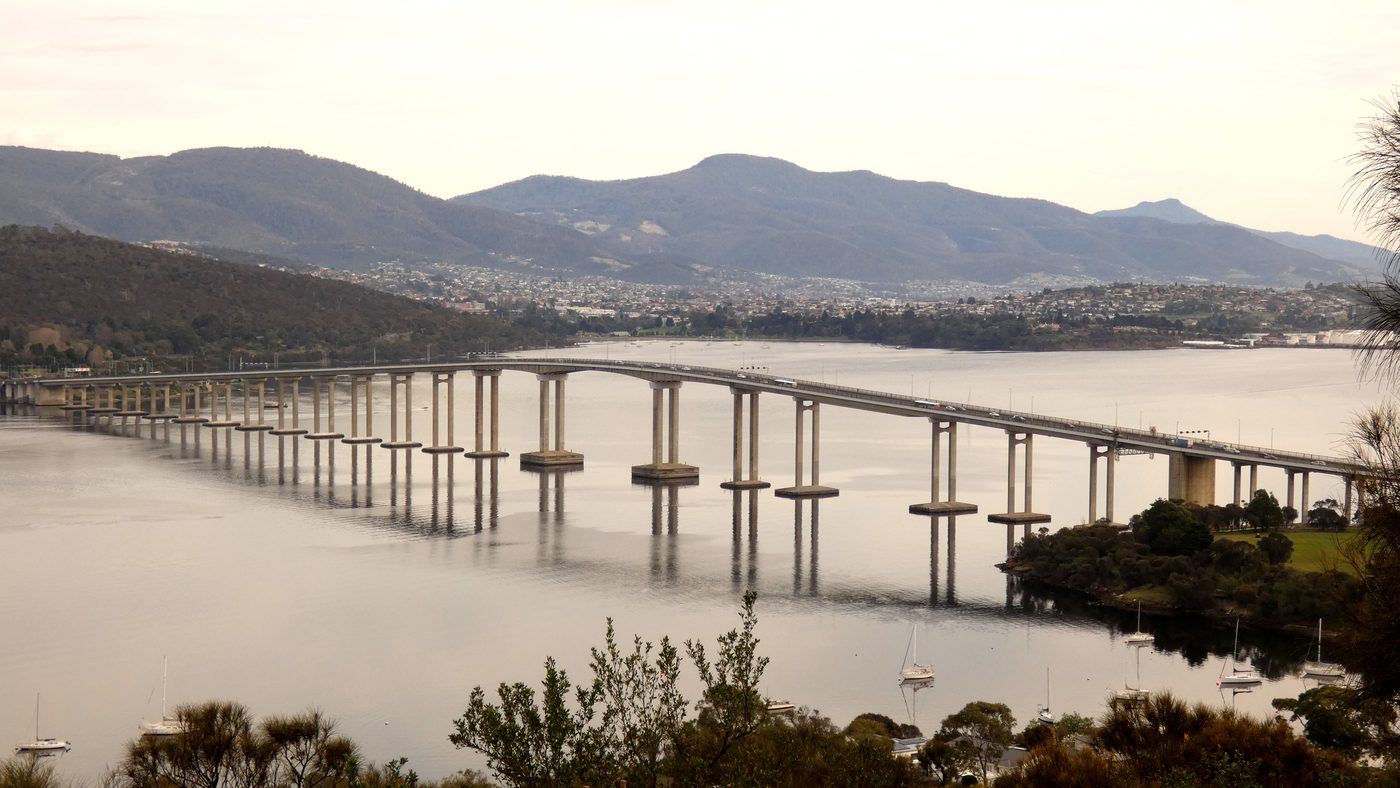
Hobart’s water is well documented in some respects and oddly undocumented in one. Here is what TasWater publishes, what it does not, and what to buy.
Where the water comes from
TasWater’s 2024–25 Annual Drinking Water Quality Report lists the Greater Hobart system with three sources: Lake Fenton, the Derwent River and multiple offtakes on Mt Wellington. It serves 84,322 connections and a population of 217,385 and is classified as potable and fluoridated. Tasmania had 59 drinking water supply systems at 30 June 2025, all classified potable for the whole year.
What TasWater publishes
| Parameter | Hobart figure | Source | What it means |
|---|---|---|---|
| Disinfectant | Chlorine | TasWater, Chlorine in drinking water | Carbon or KDF filters work |
| Fluoride | Fluoridated; 0.8 to 1.1 mg/L target, 39 of 40 systems compliant in 2024–25 | TasWater, Fluoridation page and 2024–25 report | Reverse osmosis to remove |
| Hardness | Not published as a single figure | TasWater Water Quality Portal, by suburb | Check your suburb |
Chlorine. TasWater’s chlorine page is direct: chlorine has been used for over a century, it is monitored across the network, and customers near a dosing point or on low-flow mains may notice a taste. Its advice is to chill a jug of water so the chlorine dissipates, or use a household filter that is properly maintained. Because it is chlorine rather than chloramine, the ordinary filters work; no catalytic carbon or vitamin C is needed.
Fluoride. Tasmania was the first Australian state to fluoridate, at Beaconsfield in 1953, and about 99 percent of TasWater’s reticulated customers receive fluoridated water. The report records no exceedances of the 1.5 mg/L health guideline in 2024–25. TasWater’s filter advice notably asks that a household filter “does not remove fluoride”; if your choice is to remove it anyway, reverse osmosis is the method, and the fluoride guide covers it.
Hardness. This is the gap. Hunter Water, Icon Water and the City of Gold Coast each put a hardness number in their reports; TasWater’s report covers compliance and its public pages do not give a Hobart figure. The Water Quality Portal on its “Your drinking water” page is a map updated monthly with results by suburb or system, and that is where to look. We have not quoted a number we did not read.
What to buy in Hobart
- Chlorine taste: a water filter jug or the Philips on-tap filter. TasWater’s own advice to chill a jug of water overnight costs nothing and works for plain chlorine.
- Shower: the Philips KDF filter, the right media for chlorinated supplies. See do shower filters work.
- Fluoride: a WaterMark-listed reverse osmosis system such as the Philips 75 GPD station, or a countertop unit in a rental. The cheapest online kits (Geekpure, iSpring) aren’t on the WaterMark register, so a licensed plumber can’t install them. The worth-it guide and the installation cost guide cover the decision and the plumber.
- Scale: check the portal first. If your suburb reads under 60 mg/L, nothing. The softener guide explains what to do if it reads high.
- Tank water: many households outside the reticulated system are on rainwater. Those need a sediment stage and ideally UV, covered in the whole-house guide and the benchtop guide.
- Your own water: test your own tap water with hardness strips or a TDS meter before you buy. The test kit guide covers what a home kit can and can’t tell you, and when to use a NATA-accredited lab instead.
Launceston and the rest of the state
TasWater runs 59 systems and reports on each. Launceston has four (Distillery Creek, North Esk, South Esk, West Tamar), all fluoridated according to the report. Smaller systems, including Lady Barron on Flinders Island and Grassy on King Island, are not fluoridated. The report’s system table is the place to check your own.
Using the Water Quality Portal
TasWater’s “Your drinking water” page carries a map and a table that you can search by suburb or by water system name, updated each month, alongside an explanation of how the results are tested and what they mean. TasWater says it tests more than 250,000 times a year. Look for the Greater Hobart system, or your suburb, and read the chlorine residual and fluoride figures; if hardness is listed for your zone, that is the number to use for a dishwasher setting and for deciding whether scale is worth worrying about. The same site lists Boil Water and Do Not Consume alerts for regional systems, which is worth knowing if you are on a smaller supply outside Hobart.
The one trap
Assuming Tasmanian water is soft because it comes off mountains, and skipping the check. It may well be, but TasWater does not say so in the material we read, and buying or not buying a softener on an assumption is how people end up with the wrong thing. The portal is free and takes a minute. Read your suburb, then decide.
Sources: TasWater, Annual Drinking Water Quality Report 2024–25; TasWater, Chlorine in drinking water; TasWater, Fluoridation of drinking water; TasWater, Your drinking water (Water Quality Portal); Australian Drinking Water Guidelines (NHMRC). The city comparison sets these facts beside the other capitals.
Where to buy our picks
- Brita Marella XL 3.5L jugSee today's price on Amazon (4 cartridges)
- Philips 3-stage shower filter, KDF and double meshSee today's price on Amazon
- Philips 75 GPD reverse osmosis tap water station with remineraliserSee today's price on Amazon
Paid links: we may earn a commission. As an Amazon Associate I earn from qualifying purchases. Prices change; the shop's page is the final word.
The picks in detail
Tap a pick for its full specs, pros and cons and every shop.
TasteBrita Marella XL 3.5L jug
$49.90 at Bunnings · checked 23 Oct 2026Specs, pros and cons, all 2 shops
Chlorine is the only taste issue and a $50 jug handles it.
- Capacity: 3.5 L total, about 2 L filtered
- Cartridge: Maxtra Pro, about 150 L or 4 weeks each
- Reduces: Chlorine, limescale, lead and copper (Brita claim)
- Fridge door fit: Yes, Brita says: 25.8 cm tall, 14.8 cm deep
- In the box: 3 Maxtra Pro cartridges at Bunnings (blue), 4 at Amazon Australia (white)
- Yearly running cost: About $133: 13 Maxtra Pro a year at the Bunnings 6-pack price ($61.49, 23 Oct 2026)
- Certification: None shown on the Bunnings listing (Brita's own NSF/ANSI 53 PFAS test claim, no certificate shown)
- Install: Nothing to fit: a jug
Pros
- Cartridges sold everywhere in Australia
- Three cartridges in the box covers about three months
Cons
- Slow to filter compared with a plumbed system
- Does not remove fluoride
- Ongoing cartridge cost adds up
Paid links: we may earn a commission. As an Amazon Associate I earn from qualifying purchases. Price checked 23 Oct 2026.
ShowerPhilips 3-stage shower filter, KDF and double mesh
See retailer · checked 9 Nov 2026Specs, pros and cons and where to buy
Chlorinated water, so KDF is the right media.
- Media: KDF plus mesh stages
- Fits: Standard shower arm thread
- Reduces: Chlorine (manufacturer claim)
- Cartridge life: 4-6 months or 50,000 L (Philips claim)
Pros
- Sold and shipped by Amazon Australia
- KDF is the media with real evidence for chlorine reduction
- Fits before your existing shower head
Cons
- Cartridges need replacing every few months
- Slight reduction in flow
Paid links: we may earn a commission. As an Amazon Associate I earn from qualifying purchases. Price checked 9 Nov 2026.
FluoridePhilips 75 GPD reverse osmosis tap water station with remineraliser
$499 at Bunnings · checked 9 Nov 2026Specs, pros and cons, all 2 shops
WaterMark-listed reverse osmosis, so a licensed plumber can fit it. RO is the only common home method that removes fluoride.
- Output: 75 GPD
- Remineraliser: Yes
- Install: Plumbed, licensed plumber
- Certification: WaterMark, licence 060214
- WaterMark: Yes, licence 060214
- Yearly running cost: About $215 to $335 at Philips RRP (AUT515, AUT514, AUT521 sets)
Pros
- RO with remineralisation from a brand you can buy in-store
- Bunnings warranty and returns
Cons
- A tank system, so it fills the cupboard and sends water to the drain like any tank RO
Paid links: we may earn a commission. As an Amazon Associate I earn from qualifying purchases. Price checked 9 Nov 2026.
Frequently asked questions
Is Hobart water chlorinated or chloraminated?
Chlorinated. TasWater's chlorine page says chlorine keeps Tasmania's drinking water safe and that it monitors chlorine levels across its network; nothing in its 2024–25 report or pages refers to chloramination of the Greater Hobart system. Standard carbon and KDF filters work.
Is Hobart water fluoridated?
Yes. TasWater's 2024–25 Annual Drinking Water Quality Report lists the Greater Hobart system, 84,322 connections serving about 217,000 people, as a fluoridated supply, and TasWater keeps fluoride between 0.8 and 1.1 mg/L. About 99 percent of its customers receive fluoridated water.
Is Hobart water hard?
TasWater does not publish a single hardness figure for Hobart on the pages or in the report we read, so we do not quote one. The sources are upland catchments and the Derwent, and its Water Quality Portal gives monthly results by suburb. Check your suburb there before buying anything for scale.