
The best reverse osmosis systems in Australia, and which ones a plumber can fit
The best reverse osmosis system for most homes is the Philips 75 GPD RO tap water station with remineraliser, $499 at Bunnings (checked 9 Nov 2026). It's WaterMark-listed, so a licensed plumber can fit it. Dearer options at Bunnings, $625 to $699: the Stefani 5-stage tank system and the tankless Philips AUT8950.
We may earn a commission when you buy through links on this page.Paid links: we may earn a commission. Between equal products or shops, one that pays us can go first. How this works.
Philips 75 GPD reverse osmosis tap water station with remineraliser
WaterMark-listed tank RO with a remineraliser, from Bunnings with Bunnings returns, or on Amazon.
$499 at Bunnings, checked 9 Nov 2026 · Amazon's price is on its page
Paid links: we may earn a commission. As an Amazon Associate I earn from qualifying purchases. It doesn't change which product is here.
Our reverse osmosis system picks at a glance
| Product | Best for most homesPhilips 75 GPD reverse osmosis tap water station with remineraliser $499 at Bunnings | Best tanklessWaterdrop X8 tankless under-sink reverse osmosis, 800 GPD $629.30 at Waterdrop | Tankless with a remineraliserPhilips AUT8950/79 400 GPD tankless reverse osmosis tap water station with remineraliser $699 at Bunnings | Best for rentersWaterdrop C1S countertop reverse osmosis, no plumbing $399.20 at Waterdrop | WaterMark tank system, in-storeStefani Undercounter 5-stage reverse osmosis system with 12 L tank $625 at Bunnings |
|---|---|---|---|---|---|
| WaterMark | ✓ Yes, licence 060214 | ✓ Yes, licence 032422 | ✓ Yes, licence 060214 | Not needed: countertop, no plumbing | ✓ Yes, licence 022200 (certified to WMTS-103) |
| Yearly running cost | About $215 to $335 at Philips RRP (AUT515, AUT514, AUT521 sets) | About $289 at Waterdrop AU prices (F1G yearly, F2 six-monthly, X8-F3 every two years) | About $192 at Philips RRP (AUT619 yearly, AUT620R400 every 3 years) | About $120: one C1RF filter a year at $119.99 (Waterdrop Australia, in stock on 8 Nov 2026) | About $368 to $736 at Bunnings prices, depending on how often you change the set |
| Install | Plumbed, licensed plumber | Plumbed with its own tap and a drain connection; needs a power point under the sink | Plumbed with its own tap, licensed plumber; 11 cm wide unit | Plugs in, no plumbing | Plumbed with its own tap and drain, licensed plumber |
| Why it's here | WaterMark-listed tank RO with a remineraliser, from Bunnings with Bunnings returns, or on Amazon. | WaterMark-listed, certified to NSF/ANSI 58 for dissolved solids (IAPMO), no tank, about a 2:1 drain ratio. Needs a power point under the sink. | WaterMark-listed, about 70 percent recovery on the listing, at Bunnings and Amazon Australia. | No plumbing at all, a low waste ratio for an RO unit, and filters at about $120 a year. | A five-stage tank system with the membrane on the Bunnings shelf. Dearest to run here. |
| Watch out for | A tank system, so it fills the cupboard and sends water to the drain like any tank RO | Needs electricity under the sink, which many Australian kitchens do not have | Dearest RO system at Bunnings short of the multi-temperature models | No RO performance certification | More than twice the price of the Geekpure, though the Geekpure listing shows no WaterMark |
| Buy | Today's price on Amazon$499 at Bunnings | $629.30 at Waterdrop (with code WDX8)Today's price on Amazon | Today's price on Amazon$699 at Bunnings | $399.20 at Waterdrop (with code WDC1S)Today's price on Amazon | $625 at Bunnings |
WaterMark-listed tank RO with a remineraliser, from Bunnings with Bunnings returns, or on Amazon.
WaterMark-listed tank RO with a remineraliser, from Bunnings with Bunnings returns, or on…
Watch out: A tank system, so it fills the cupboard and sends water to the drain like any tank RO
- WaterMark: Yes, licence 060214
- Yearly running cost: About $215 to $335 at Philips RRP (AUT515, AUT514, AUT521 sets)
- Install: Plumbed, licensed plumber
$499 at Bunnings, checked 9 Nov 2026 · Amazon's price is on its page
WaterMark-listed, certified to NSF/ANSI 58 for dissolved solids (IAPMO), no tank, about a 2:1 drain ratio. Needs a power point under the sink.
WaterMark-listed, certified to NSF/ANSI 58 for dissolved solids (IAPMO), no tank, about a 2:1…
Watch out: Needs electricity under the sink, which many Australian kitchens do not have
- WaterMark: Yes, licence 032422
- Yearly running cost: About $289 at Waterdrop AU prices (F1G yearly, F2 six-monthly, X8-F3 every two years)
- Install: Plumbed with its own tap and a drain connection; needs a power point under the sink
$629.30 at Waterdrop · checked 9 Nov 2026
WaterMark-listed, about 70 percent recovery on the listing, at Bunnings and Amazon Australia.
WaterMark-listed, about 70 percent recovery on the listing, at Bunnings and Amazon Australia.
Watch out: Dearest RO system at Bunnings short of the multi-temperature models
- WaterMark: Yes, licence 060214
- Yearly running cost: About $192 at Philips RRP (AUT619 yearly, AUT620R400 every 3 years)
- Install: Plumbed with its own tap, licensed plumber; 11 cm wide unit
$699 at Bunnings, checked 9 Nov 2026 · Amazon's price is on its page
No plumbing at all, a low waste ratio for an RO unit, and filters at about $120 a year.
No plumbing at all, a low waste ratio for an RO unit, and filters at about $120 a year.
Watch out: No RO performance certification
- WaterMark: Not needed: countertop, no plumbing
- Yearly running cost: About $120: one C1RF filter a year at $119.99 (Waterdrop Australia, in stock on 8 Nov 2026)
- Install: Plugs in, no plumbing
$399.20 at Waterdrop · checked 9 Nov 2026
A five-stage tank system with the membrane on the Bunnings shelf. Dearest to run here.
A five-stage tank system with the membrane on the Bunnings shelf.
Watch out: More than twice the price of the Geekpure, though the Geekpure listing shows no WaterMark
- WaterMark: Yes, licence 022200 (certified to WMTS-103)
- Yearly running cost: About $368 to $736 at Bunnings prices, depending on how often you change the set
- Install: Plumbed with its own tap and drain, licensed plumber
$625 at Bunnings · checked 9 Nov 2026
Quick answer: Best for most: the Philips 75 GPD RO station, $499 at Bunnings (checked 9 Nov 2026), also on Amazon Australia. It is WaterMark-listed, so a licensed plumber can fit it, and it puts minerals back for taste. Allow about $200 to $350 for the plumber and $215 to $335 a year for filters. Small cupboard: the Waterdrop X8 tankless, $629.30 with code WDX8 at Waterdrop Australia ($899 list, checked 9 Nov 2026), WaterMark-listed and certified to NSF/ANSI 58 for dissolved solids. Renting: the Waterdrop C1S countertop, $399.20 with code WDC1S at Waterdrop Australia ($499 list), no plumber. The cheapest online kits, Geekpure and iSpring, aren't WaterMark-listed, so a plumber can't legally install them.
How we picked: We compared reverse osmosis systems sold in Australia on WaterMark (looked up in the WaterMark product database on 18 Oct 2026), NSF/ANSI certification (looked up on the certifier's listing), install needs, water to the drain, and yearly filter cost. We haven't tested them hands-on yet. Specs are the makers' claims and are labelled as theirs. Commission never puts a worse product ahead of a better one, but between equal products or shops, one that pays us can go first. Full method.
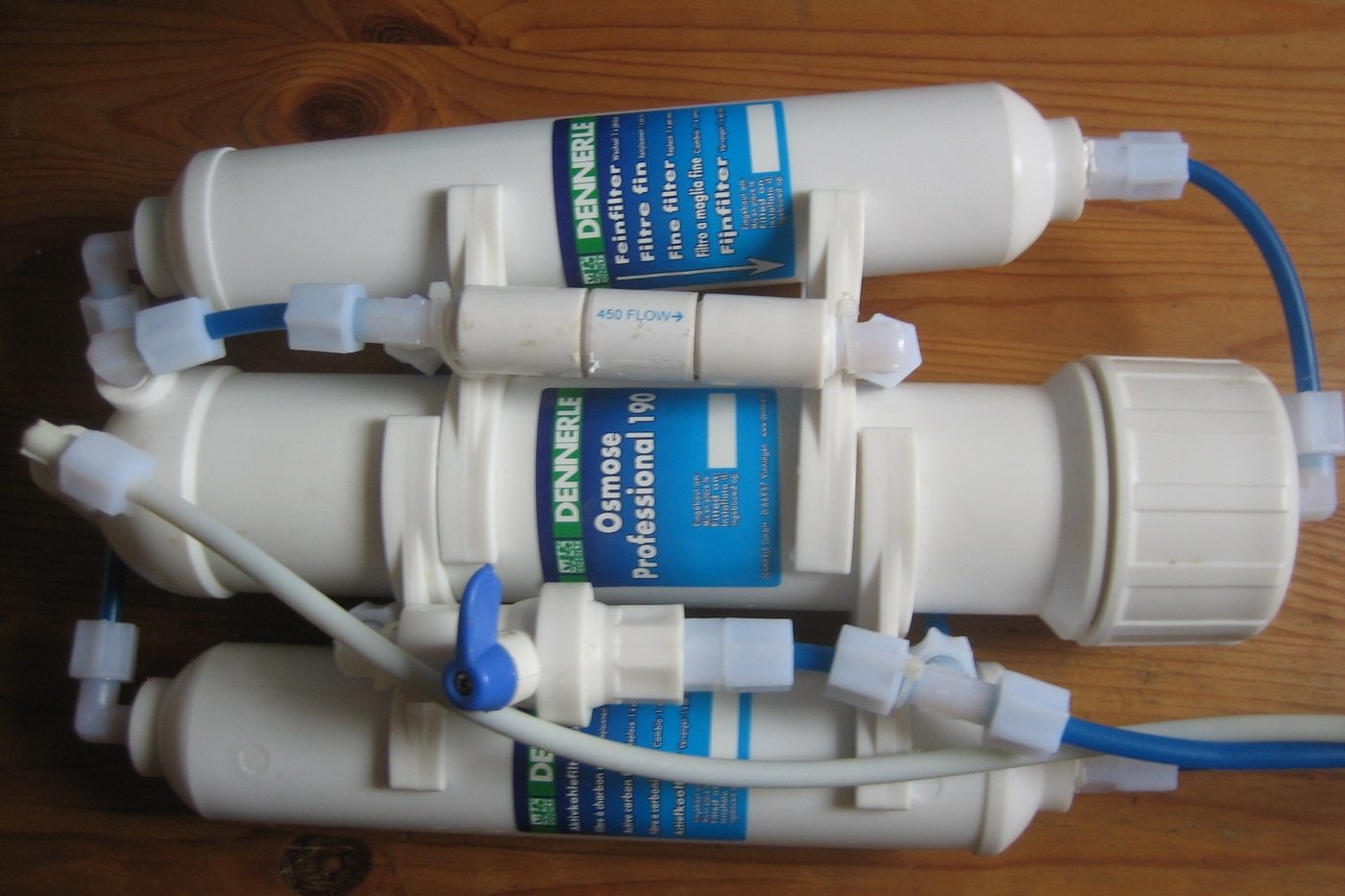
Reverse osmosis is the step beyond carbon. If you want fluoride and dissolved salts out of your drinking water, reverse osmosis is the usual home method, and it is now affordable. In Australia a plumbed system also needs WaterMark, or a licensed plumber may not fit it.
Questions to ask before buying a reverse osmosis system in Australia
- Will a licensed plumber fit it? Only if it’s certified where WaterMark applies. WaterMark says a licensed plumber is not permitted to install a product of a listed type that isn’t certified, even if it was legal to sell. Search the WaterMark register by model before you pay.
- Do I need reverse osmosis at all? The national guidelines rate dissolved solids up to 600 mg/L as good for taste. Ask your water utility for your figure. If your complaint is chlorine taste, a carbon filter does that job for far less.
- Do I want the fluoride out? The guideline limit is 1.5 mg/L, and fluoridated supplies sit under it. Reverse osmosis takes it out, so whether you want that is your call.
- Is the filtering certified, or only claimed? Look the model up on the NSF and IAPMO listings. NSF/ANSI 58 covers RO performance; NSF/ANSI 372 covers lead-free materials only.
- I rent. Can I fit it? In Queensland it’s a breach to attach a fixture without written approval. Victoria has a short list of changes that need no permission, and plumbing isn’t on it, so get your landlord’s agreement in writing first.
- What happens if it fails after the warranty? The ACCC says the consumer guarantee of acceptable quality usually still applies after a warranty expires.
How does reverse osmosis work?
Pressure pushes water through a semi-permeable membrane. Water molecules pass; dissolved salts, fluoride, metals and most larger molecules do not, and are flushed to the drain. Pre-filters protect the membrane from sediment and chlorine, and a post-carbon polishes taste. Under-sink systems store the slow output in a small pressurised tank feeding a dedicated tap. Countertop units use a pump and a reservoir instead of plumbing.
Do you actually need reverse osmosis?
Only if you want fluoride or dissolved salts out of your drinking water, because carbon can’t remove them. For every other common problem, something cheaper does the job:
- Chlorine taste or smell: a water filter jug or an on-tap filter, with no plumber.
- Lead, cysts or PFAS from the kitchen tap: a certified carbon under-sink water filter. The Philips FastFlow is certified to NSF/ANSI 53 for PFAS; for lead or cysts, check a filter’s own NSF/ANSI 53 listing names them.
- Chlorine in the shower: reverse osmosis only treats drinking water. A shower filter screws onto the shower arm; Bunnings sells them only as Special Orders or through Marketplace sellers (shower filters at Bunnings).
Not sure what is in your water? Test your own tap water first: a TDS meter shows how much reverse osmosis would take out, and the same meter tells you later when the membrane is tiring.
The trade-offs, honestly
RO is slow, it wastes water, it strips minerals, and it takes space. Tank systems fill most of an under-sink cupboard. The reject water is clean enough for the garden, and plumbing it there is worth asking the plumber about. Remineralising stages, as on the iSpring and Philips units, put calcium and magnesium back for taste; our alkaline filter guide explains what they do and do not do. If you are still deciding whether RO is the right tool at all, the worth-it guide goes city by city.
Does a reverse osmosis system need a plumber?
A plumbed under-sink system does; a countertop unit does not. Under-sink RO is plumbing: cold feed, drain connection and a new tap, done by a licensed plumber with WaterMark-certified fittings, while countertop RO plugs into a power point and that is all. The installation cost guide has sourced plumber rates and what pushes the bill up.
What does a reverse osmosis system cost all up?
Three costs, not one: the system, the plumber and the filters. For the cheapest WaterMark-listed system at Bunnings that means $499 for the Philips 75 GPD, about $200 to $350 for a licensed plumber and $215 to $335 a year for its filters. The cheapest kits online, such as the Geekpure, cost less to buy, but they aren’t on the WaterMark register, so a licensed plumber can’t fit them and the saving is false. With no plumber at all, a countertop unit costs nothing to install: the Waterdrop C1S runs on about $120 a year in filters, and our countertop reverse osmosis guide compares the affordable no-plumbing units.
Under-sink, tankless or countertop
Three kinds of reverse osmosis system are sold in Australia, and the choice between them matters more than the brand.
| Under-sink with tank | Tankless under-sink | Countertop | |
|---|---|---|---|
| Plumbing | Cold feed, drain and its own tap; licensed plumber | Same, plus a power point under the sink | None; fill a tank by hand and plug in |
| Space | Most of the cupboard (tank plus housings) | A slim unit, no tank | Bench space, roughly a kettle and a half |
| Water to the drain | About two to four litres per litre made | About one to two litres per litre made | About one litre per three made (listing figures) |
| Speed | Slow to the tank, fast from it | Fast on demand | Slow, a reservoir at a time |
| Who it suits | Owners wanting the cheapest complete system | Owners short on cupboard space or on a water-restricted supply | Renters, and anyone who cannot touch the plumbing |
| Examples here | Geekpure, iSpring, Stefani, Philips 75 GPD | Waterdrop X8, Philips 400 GPD | Waterdrop C1S |
WaterMark is the line that decides it. It is the Australian plumbing approval, and a licensed plumber isn’t permitted to install a filter that isn’t on the register. On 18 October 2026 the two Philips stations, the Waterdrop X8 and the Stefani were listed; the Geekpure and iSpring kits sold online were not. NSF/ANSI 58 is the performance standard written for reverse osmosis; the X8’s listing (IAPMO) covers dissolved solids, and its NSF/ANSI 42 listing covers chlorine, taste and odour. Lead, PFAS and fluoride aren’t on its listings, whatever the product title says.
Which cities is reverse osmosis worth it in?
Every capital fluoridates, and reverse osmosis is the only common home method that removes fluoride, so that case holds everywhere. The stronger case is hardness and dissolved solids, which only two capitals have. The figures come from our city guides, which summarise each utility’s own reports.
| City | Disinfectant | Hardness | What reverse osmosis does about it |
|---|---|---|---|
| Brisbane, Ipswich, Logan, Moreton Bay | Chloramine | Moderate, varies by zone and season | Removes the fluoride, which carbon leaves in. For the chloramine taste the city guide’s answer is catalytic carbon under the sink. |
| Gold Coast | Chlorine | Soft, 37 to 58 mg/L (average 47) | Only RO removes the fluoride (about 0.75 mg/L). Any carbon filter handles the chlorine, and nothing is needed for scale. |
| Sydney | Mostly chlorine; chloramine in some systems | Soft, about 43 mg/L | Fluoride only. For chlorine taste the city guide says the cheapest carbon option works. |
| Melbourne | Chlorine; chloramine in western and growth areas | Softest of the capitals, about 30 mg/L average | Fluoride only. Most inner households want nothing more than a jug or on-tap filter. |
| Adelaide | Chloramine across the metro area | Hard, about 130 to 200 mg/L, higher in summer | The city where RO earns its running cost: it removes hardness, dissolved solids and fluoride at once. Choose a WaterMark-listed, remineralising model. |
| Perth | Free chlorine | Hardest of the capitals, about 100 to over 200 mg/L | Deals with the dissolved minerals and fluoride at the kitchen tap. Scale through the rest of the house needs a whole-house softener. |
| Canberra | Chlorine plus UV; no chloramine | Soft, 21 to 59 mg/L (average 37) | Only RO removes the fluoride (about 0.79 mg/L). Icon Water says it does not recommend filters at all. |
| Hobart | Chlorine | Not published as a single figure | Only RO removes the fluoride (0.8 to 1.1 mg/L). Any carbon filter covers the chlorine taste. |
The picks
The Philips 75 GPD station is our pick for most homes: WaterMark-listed, so a plumber can fit it, with a remineraliser for taste and Bunnings returns. Short on cupboard space, choose the Waterdrop X8 tankless, which also carries NSF/ANSI 58 certification, or the Philips 400 GPD tankless station. Renters should buy the Waterdrop C1S countertop. The Stefani five-stage is the WaterMark-listed tank system you can carry out of a Bunnings store, but its filters cost the most to run. The Waterdrop and iSpring brand pages cover those ranges, and the fluoride guide covers the one non-RO fluoride option.
Systems we left out and why
- Geekpure 5-stage (Amazon Australia): the cheapest complete kit we found, with standard cartridges, but it isn’t on the WaterMark register, so a licensed plumber can’t install it.
- iSpring RCC7AK (Amazon Australia): a six-stage kit with a remineraliser, but it isn’t on the WaterMark register either.
- iSpring RCS5T 500 GPD tankless: no WaterMark, over a thousand dollars with one in stock when we checked, no system certification stated on the listing, and it needs power under the sink.
- Waterdrop A2 countertop (hot and cold water): $899 list, $679.15 with code WDA2 (9 Nov 2026), and only the materials are certified; Amazon’s NSF/ANSI 58 wording isn’t backed by any listing we found.
- Waterdrop C1H countertop (instant hot water): out of stock at Waterdrop Australia on 21 Oct 2026, its Amazon link now opens the C1S, and only the materials are certified, not the filtration performance.
Where to buy the reverse osmosis system picks
- Philips 75 GPD reverse osmosis tap water station with remineraliserSee today's price on Amazon
- Waterdrop X8 tankless under-sink reverse osmosis, 800 GPD$629.30 at Waterdrop (with code WDX8)
- Philips AUT8950/79 400 GPD tankless reverse osmosis tap water station with remineraliserSee today's price on Amazon
- Waterdrop C1S countertop reverse osmosis, no plumbing$399.20 at Waterdrop (with code WDC1S)
- Stefani Undercounter 5-stage reverse osmosis system with 12 L tank$625 at Bunnings
Paid links: we may earn a commission. As an Amazon Associate I earn from qualifying purchases. Prices change; the shop's page is the final word.
The reverse osmosis system picks in detail
Tap a pick for its full specs, pros and cons and every shop.
Best for most homesPhilips 75 GPD reverse osmosis tap water station with remineraliser
$499 at Bunnings · checked 9 Nov 2026Specs, pros and cons, all 2 shops
WaterMark-listed tank RO with a remineraliser, from Bunnings with Bunnings returns, or on Amazon.
- Output: 75 GPD
- Remineraliser: Yes
- Install: Plumbed, licensed plumber
- Certification: WaterMark, licence 060214
- WaterMark: Yes, licence 060214
- Yearly running cost: About $215 to $335 at Philips RRP (AUT515, AUT514, AUT521 sets)
Pros
- RO with remineralisation from a brand you can buy in-store
- Bunnings warranty and returns
Cons
- A tank system, so it fills the cupboard and sends water to the drain like any tank RO
Paid links: we may earn a commission. As an Amazon Associate I earn from qualifying purchases. Price checked 9 Nov 2026.
Best tanklessWaterdrop X8 tankless under-sink reverse osmosis, 800 GPD
$629.30 at Waterdrop · checked 9 Nov 2026Specs, pros and cons, all 2 shops
WaterMark-listed, certified to NSF/ANSI 58 for dissolved solids (IAPMO), no tank, about a 2:1 drain ratio. Needs a power point under the sink.
- Stages: 9 stages in composite cartridges with a 0.0001 micron RO membrane (listing)
- Install: Plumbed with its own tap and a drain connection; needs a power point under the sink
- Flow rate: 800 GPD, about 3,000 L a day, no storage tank
- Filter life: RO filter up to 24 months (listing)
- Certification: NSF/ANSI 58 for TDS and 42 for chlorine, taste and odour (IAPMO); lead, PFAS and fluoride are not on the listings
- WaterMark: Yes, licence 032422
- Yearly running cost: About $289 at Waterdrop AU prices (F1G yearly, F2 six-monthly, X8-F3 every two years)
Pros
- Tankless, so it frees most of the cupboard a tank system fills
- 2:1 pure-to-drain ratio, far better than a traditional tank RO
- Full system certification to NSF/ANSI 58, which the cheap tank systems do not carry
- Tap shows TDS and filter life
Cons
- Needs electricity under the sink, which many Australian kitchens do not have
- About three times the price of the Geekpure
Paid links: we may earn a commission. As an Amazon Associate I earn from qualifying purchases. Price checked 9 Nov 2026.
Tankless with a remineraliserPhilips AUT8950/79 400 GPD tankless reverse osmosis tap water station with remineraliser
$699 at Bunnings · checked 9 Nov 2026Specs, pros and cons, all 2 shops
WaterMark-listed, about 70 percent recovery on the listing, at Bunnings and Amazon Australia.
- Stages: Aquaporin Inside RO with remineraliser; dual-outlet tap gives RO or micro-filtered water
- Install: Plumbed with its own tap, licensed plumber; 11 cm wide unit
- Flow rate: 1.05 L/min RO, 2.4 L/min micro-filtered, no tank (listing)
- Filter life: Up to 3 years or 11,000 L (listing)
- Certification: WaterMark certified (Amazon AU listing)
- WaterMark: Yes, licence 060214
- Yearly running cost: About $192 at Philips RRP (AUT619 yearly, AUT620R400 every 3 years)
Pros
- 70 percent recovery: two litres of purified water from every three (listing), against 25 to 33 percent for tank systems
- Tankless and slim, so the cupboard stays usable
- Sold at Bunnings and Amazon AU, so service and returns are local
Cons
- Dearest RO system at Bunnings short of the multi-temperature models
- Proprietary cartridges
Paid links: we may earn a commission. As an Amazon Associate I earn from qualifying purchases. Price checked 9 Nov 2026.
Best for rentersWaterdrop C1S countertop reverse osmosis, no plumbing
$399.20 at Waterdrop · checked 9 Nov 2026Specs, pros and cons, all 2 shops
No plumbing at all, a low waste ratio for an RO unit, and filters at about $120 a year.
- Install: Plugs in, no plumbing
- Stages: 6-stage RO in one composite cartridge (Waterdrop)
- Waste ratio: 3:1 pure to drain on its own page; 2:1 in Waterdrop's comparison table
- Yearly running cost: About $120: one C1RF filter a year at $119.99 (Waterdrop Australia, in stock on 8 Nov 2026)
- Certification: NSF/ANSI 372 lead-free materials only (IAPMO W-13936); its TDS, lead, PFAS and fluoride figures are Waterdrop's own tests
- WaterMark: Not needed: countertop, no plumbing
Pros
- Sold by an Australian seller (Waterdrop Australia), so delivery and returns are local
- Detachable jug for the clean water fits in the fridge
Cons
- No RO performance certification
- You refill a tank by hand, and it needs power and bench space
Paid links: we may earn a commission. As an Amazon Associate I earn from qualifying purchases. Price checked 9 Nov 2026.
WaterMark tank system, in-storeStefani Undercounter 5-stage reverse osmosis system with 12 L tank
$625 at Bunnings · checked 9 Nov 2026Specs, pros and cons and where to buy
A five-stage tank system with the membrane on the Bunnings shelf. Dearest to run here.
- Stages: 5 (5 micron sediment, GAC, 5 micron carbon block, RO membrane, post carbon)
- Install: Plumbed with its own tap and drain, licensed plumber
- Flow rate: Tank system; 12 L storage (listing)
- Filter life: Not stated on the listing
- Certification: WaterMark lead-free certified (listing)
- WaterMark: Yes, licence 022200 (certified to WMTS-103)
- Yearly running cost: About $368 to $736 at Bunnings prices, depending on how often you change the set
Pros
- A WaterMark-certified RO system you can buy in a Bunnings store, with cartridges and the $124 membrane on the shelf
- Standard cartridge sizes shared with Stefani's under-sink range
- Listing names PFAS and dissolved solids reduction, not just taste
Cons
- More than twice the price of the Geekpure, though the Geekpure listing shows no WaterMark
- Traditional tank RO, so water waste and cupboard space are what they always were
Paid links: we may earn a commission. Price checked 9 Nov 2026.
Recent updates
- : Rewrote four headings as the questions buyers ask with the answer in the first two sentences, added a city-by-water table before the picks, widened The competition into Systems we left out and why, and added a sources list
- : Added the full cost of a system and when a cheaper filter will do
Sources
- NHMRC, Australian Drinking Water Guidelines (the standard Australian tap water is treated to)
- ABCB WaterMark Certification Scheme (the Australian plumbing approval a licensed plumber needs)
- WaterMark product register search (where we looked up each plumbed system)
- NSF certified product listings for water treatment units (search by NSF/ANSI 58 for reverse osmosis and 42 for chlorine, taste and odour)
- IAPMO R&T product listing directory (the Waterdrop X8's NSF/ANSI 58 and 42 listings)
- Utility water quality reports as summarised in our city-by-city guide (Seqwater and Urban Utilities, City of Gold Coast 2024–25, Sydney Water, Melbourne Water and Greater Western Water, SA Water, Water Corporation, Icon Water 2024–25, TasWater 2024–25)
Frequently asked questions
Does reverse osmosis remove fluoride?
Yes. Reverse osmosis is the standard home method for taking fluoride out. How much it removes depends on the membrane and its age; for a measured figure, look for fluoride on the system's NSF/ANSI 58 certification listing.
How much water does reverse osmosis waste?
Traditional tank systems send two to four litres to the drain for every litre produced. Newer countertop units claim around 3:1 the other way. On a water-restricted supply this matters; the waste can be run to a garden.
Does reverse osmosis water taste different?
Often, yes. RO takes out most dissolved minerals, and some people find the water tastes flat. A remineralising stage, as on the iSpring and both Philips units, adds some calcium and magnesium back for taste.
Under-sink or countertop reverse osmosis: which should I buy?
Under-sink if you own the home or your landlord allows a plumber: it is cheaper per litre, runs on mains pressure and feeds its own tap. Countertop if you rent or cannot touch the plumbing: it does the same filtering from a tank you fill by hand, costs more up front and takes bench space. Tankless under-sink units sit between the two, with no storage tank but a plumber and a power point.
Which reverse osmosis models are sold in Australia?
The common ones are Geekpure and iSpring five- and six-stage tank systems sold online, the Waterdrop X8 tankless and C1S countertop units, and the Philips and Stefani stations stocked at Bunnings. Of those, the two Philips stations, the Stefani and the Waterdrop X8 are on the WaterMark register, and the X8 carries NSF/ANSI 58, the standard that covers reverse osmosis performance.
Does a reverse osmosis system need a plumber in Australia?
A plumbed under-sink system does: it connects to the cold feed and the drain, and in every state that work has to be done by a licensed plumber with WaterMark-certified fittings. A countertop unit does not, because nothing connects to the plumbing.
How often do RO filters need changing?
Pre-filters every six to twelve months, the membrane every two to three years, the post-carbon yearly. A TDS meter for twenty dollars tells you when the membrane is tired.